Global mobility has changed considerably. Workforce needs are more complex, business expectations are higher, and mobility teams are being asked to deliver greater value, often without additional resources.
Yet many mobility programs still operate within structures designed for a different environment.
Over time, new policies are introduced, providers are added, and technology is implemented to address immediate needs. Individually, these decisions may make sense. Collectively, they can create a program that is increasingly difficult to manage.
The result? Mobility professionals spend more time coordinating activities, employees navigate fragmented experiences, and leadership struggles to see the broader value the function delivers.
When these challenges arise, the instinct is often to look for a technology solution. But before investing in another platform or automating another process, there’s a more important question:
Is your mobility operating model designed to support what the business needs today?
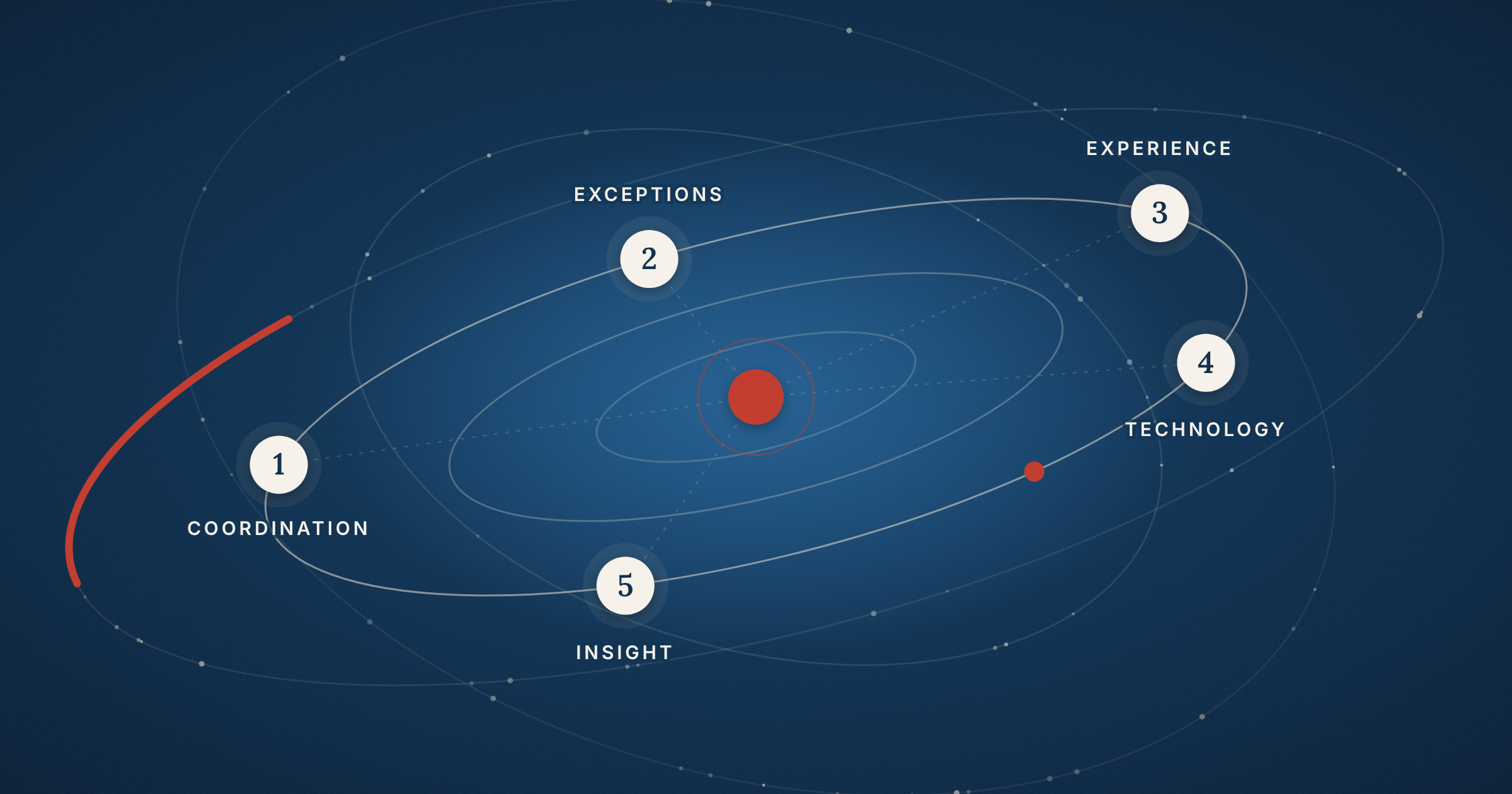
Here are five signs it may be time to rethink how your mobility function operates.
1. Your Team Spends More Time Coordinating Work Than Enabling the Business
A mobility manager starts the morning following up on an immigration approval, tracking down a cost estimate, reconciling a spreadsheet, and responding to an employee who isn’t sure whom to contact.
By lunchtime, they’ve spent hours coordinating activities without much opportunity to focus on the workforce priorities they’re there to support.
Sound familiar?
Global mobility requires coordination across HR, immigration, tax, payroll, finance, and external providers. But when chasing information, managing handoffs, and resolving routine issues consume most of the team’s time, coordination has effectively become the operating model.
Often, the underlying problem isn’t a lack of expertise. It’s unclear responsibilities, fragmented processes, or information that doesn’t flow effectively between teams and systems.
A stronger operating model distinguishes between work requiring mobility expertise, activities that can be standardized or automated, and responsibilities better managed by other internal functions or external partners.
The goal isn’t simply to reduce administration. It’s to redirect mobility expertise toward workforce planning, talent deployment, policy strategy, risk management, and employee support.
Consider: If your team spent less time coordinating routine activities, where could it create greater business value?
2. Every Move Feels Like an Exception
Global mobility will always require flexibility. Employees have different circumstances, business needs vary, and international moves rarely follow an identical path.
But when nearly every move requires a special approval, policy interpretation, or workaround, the issue may be the design of the program itself.
Consider an organization that has expanded its use of permanent transfers, short-term assignments, and alternative work arrangements but continues to administer them through policies designed primarily for traditional long-term assignments.
What appears to be an exception problem may actually be an operating model problem.
The answer isn’t necessarily more restrictive policies. It’s establishing clearer eligibility criteria, defined policy options, and appropriate decision-making authority while maintaining flexibility.
The goal is to make flexibility intentional rather than something the team must negotiate one case at a time.
3. No One Clearly Owns the Employee Experience
An employee preparing for an international move isn’t thinking about how many departments or providers are involved. They’re thinking about starting a new role, finding a home, understanding their compensation, and helping their family navigate a major transition.
To the employee, it’s one move.
Behind the scenes, however, that experience may involve an employer, relocation management company, immigration counsel, tax provider, payroll team, and destination service provider.
Each party may deliver its individual service successfully while the overall experience remains fragmented.
Employees may be asked for the same information multiple times, receive conflicting instructions, or struggle to understand what happens next. When something falls between two providers, accountability may be unclear.
A well-designed operating model establishes responsibility for the complete employee journey, not just individual services. It defines how information is shared, who resolves issues, and how employees receive consistent communication and support.
Ultimately, the objective is to reduce the administrative burden and uncertainty placed on employees, allowing them to focus on their new roles and personal transitions.
Consider: Does someone own the complete employee experience, or is accountability divided among individual service providers?
4. Your Technology Supports Individual Tasks, but Not the Complete Process
Many mobility programs already have significant technology in place: relocation platforms, immigration systems, tax portals, HRIS, payroll applications, and reporting tools.
Yet information is still entered multiple times, status updates are exchanged through email, and teams spend hours consolidating spreadsheets.
The problem isn’t necessarily a lack of technology. It may be that individual solutions were implemented without considering how the complete mobility process should operate.
Technology can automate tasks, but it cannot independently determine who owns a decision, when information should be shared, or how responsibilities should transfer between teams.
Those decisions belong to the operating model.
Before investing in additional functionality or integrations, organizations should define how work should flow, what information is needed, and which systems and partners need access to it.
Not every capability needs to reside within one platform. A connected mobility ecosystem can bring together existing systems, specialized providers, and new technology to support the organization’s preferred operating model.
The objective isn’t necessarily to replace everything or connect everything. It’s to ensure the right capabilities, information, and processes work together.
5. Leadership Receives Activity Reports Instead of Business Insight
Most mobility teams can report how many employees moved, where they relocated, what services were delivered, and how much the organization spent.
These measures are important, but they don’t necessarily answer the questions business leaders are asking.
How effectively is mobility helping deploy talent into critical markets? Are international assignments delivering the intended outcomes? Could a different approach achieve the same objective with less cost or disruption?
Consider a mobility team reporting that international assignment costs increased by 15%.
That information becomes far more valuable when the team can explain what’s driving the increase, whether the spending supports business priorities, and what options leadership has to manage future costs.
The difference is moving from reporting activity to supporting decisions.
That requires more than dashboards. It requires consistent data, a clear understanding of business objectives, and the ability to translate operational information into meaningful recommendations.
Consider: Can your mobility function explain what the business should do differently, or only report what the team has already processed?
Technology Is Not the Transformation
Recognizing these warning signs doesn’t necessarily mean your organization needs to overhaul its mobility program. But it may be time to examine whether the way mobility operates is still aligned with what the business needs.
Successful transformation isn’t measured by how many processes are automated or systems are connected. It’s measured by whether the organization can deliver services more effectively, support employees more consistently, manage risk, and provide better information for business decisions.
Technology plays an important role, but its value depends on the operating model it supports.
Before investing in the next solution, consider what you want your mobility function to become, where it creates the greatest value, and what needs to change to get there.
The opportunity isn’t simply to modernize how mobility operates. It’s to redefine what mobility can contribute to the business.
At Servicengine, we work alongside mobility teams to understand their goals, identify opportunities for improvement, and determine how the right processes and technology can support their desired operating model.
Continue the Conversation at WERC
Join us on Thursday, November 19, 2026, at WERC’s Leadership WERCshop in Redmond, Washington, for our session, “Technology Is Not the Transformation.”
We’ll explore how mobility leaders can rethink their operating models, envision a more effective future state, and identify the capabilities needed to deliver meaningful business value.